

Published
How to send designs in advance without handing them to another shop
You spend Sunday evening on a sleeve design, send it over, and the client goes quiet. A few weeks later the same design shows up on another shop's Instagram, redrawn a little stiffer, on that client's arm. The obvious fix is to stop sending designs at all. The trouble is that clients expect to see something first. Start typing the question into Google and it suggests both “do tattoo artists send designs in advance” and “do tattoo artists show you the design before your appointment”.
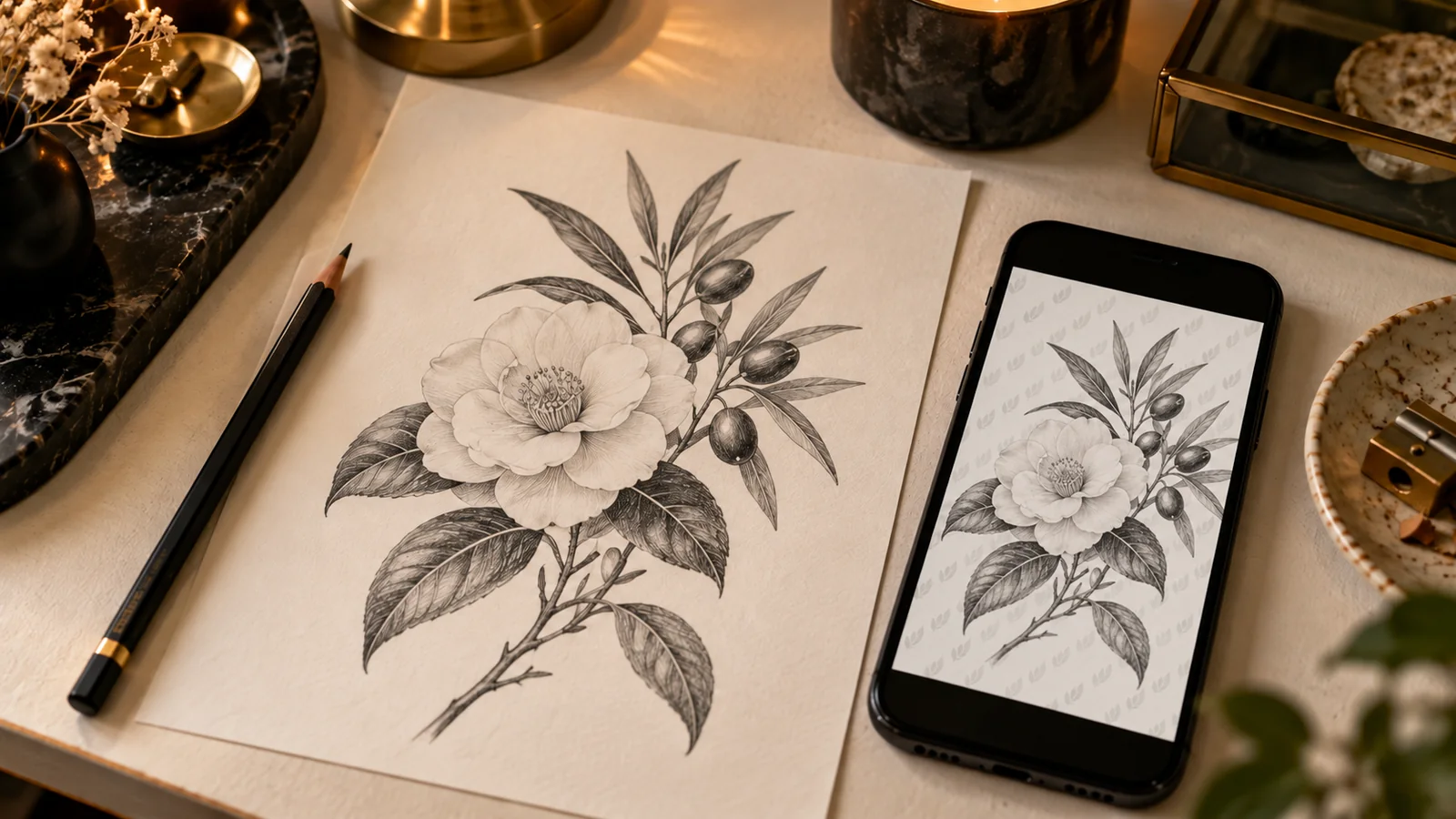
How designs leave your hands
Usually it isn't a dramatic theft. A client screenshots the draft to show a friend, drops it in a group chat to see what people think, or takes it to a cheaper shop to compare quotes. The cheaper shop is looking at a finished drawing, so it only has to quote for tracing. Often the client doesn't see a problem at all: they asked for the tattoo, so the drawing feels like theirs.
Each of these starts with the file you sent: a clean, full-size image with nothing on it that says who drew it or who it was drawn for.
Take the deposit before you draw
The simplest protection is doing things in the right order. Once a client has paid a deposit, they have a reason to come back to you, and if they don't, you've been paid something for the hours at the drawing table. Settle the amount first (how much is a tattoo deposit goes through the numbers), then start drawing.
Write the revision rules down at the same time: how many rounds of changes the deposit covers, what counts as a change and what counts as a new design, and what happens to the deposit if the client walks away after seeing the drawing. A rule the client saw before paying is hard to argue with later. Keep it with the rest of your deposit policy.
Fewer drafts also means fewer images out in the world. A clear brief before the first sketch keeps the rounds down, and the tattoo brief template lists what to ask for: placement, size, references and the parts the client hasn't decided yet.
Four ways to send designs in advance
| How you share it | What it protects | The catch |
|---|---|---|
| Show it only on the day | Nothing leaves the studio | Changes happen in the chair and eat into the session. Hard to do with a sleeve or a back piece that needs a few rounds. |
| Show it in person a few days before | Nothing leaves the studio, and there's time for changes | An extra trip for the client, and no good for clients traveling in for the session. |
| Send a low-resolution image | Makes a clean trace harder | It's still enough to redraw from, and redrawing is all a copycat needs. |
| Send it with a watermark | Marks the drawing as yours | A studio name in the corner crops out in seconds. A watermark across the middle with the client's name on it is much harder to pass around. |
You can mix them. Watermarked images for the drafts, the clean line drawing only on the day: the client gets something to look at at home, and the version anyone could trace never leaves the studio.
Put the client's name on the watermark
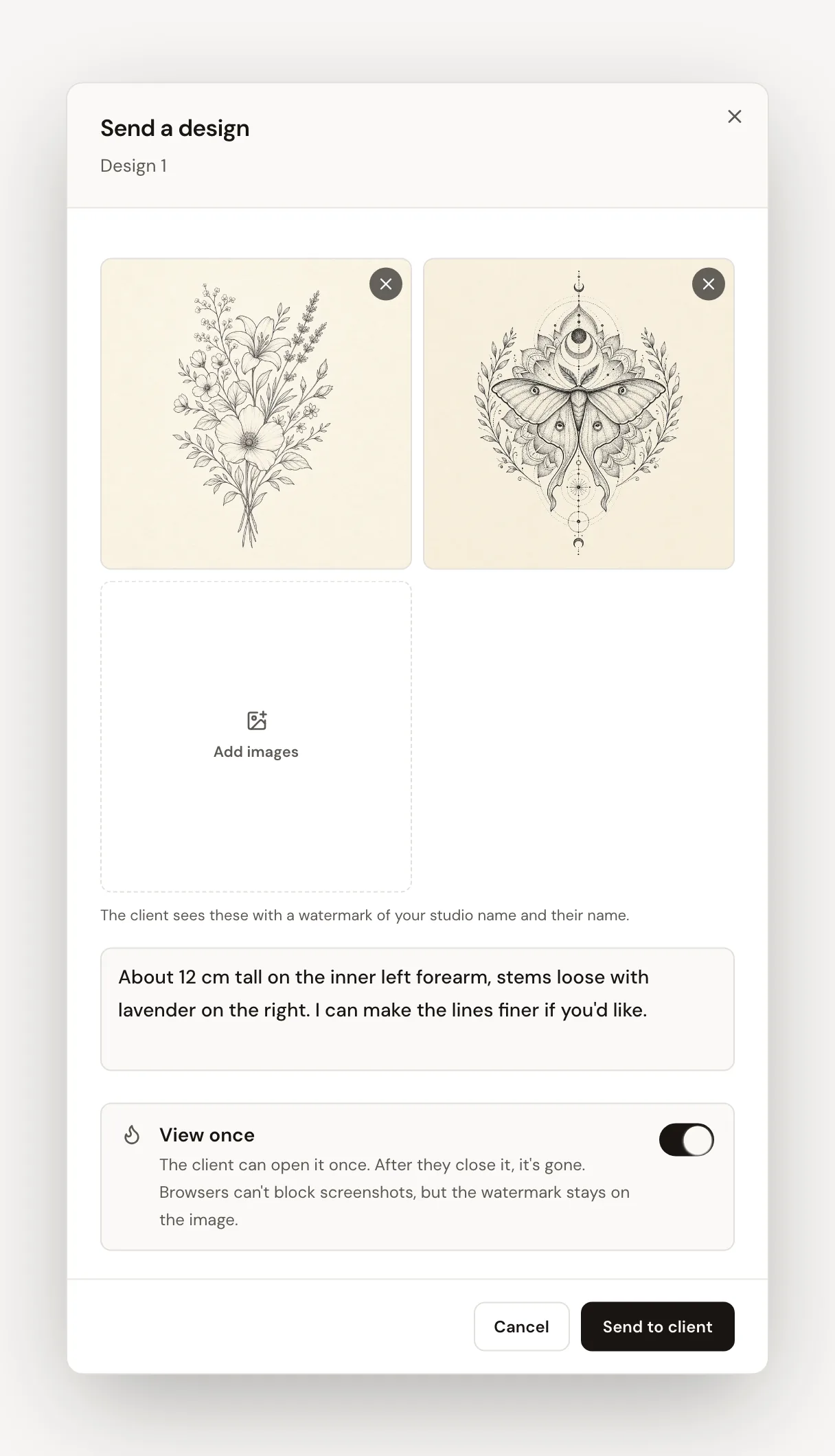
A watermark with only your studio name stops strangers from passing off your work. It does very little against the person you sent it to, because they know it came from you and they don't mind. Add their name and that changes. Forwarding the image now means sending around a picture with their own name stamped across it, and any artist who receives it can see whose drawing it is and who it was drawn for.
Where the watermark sits decides whether it survives. Run it through the middle of the design. Repeat it on a diagonal so a crop can't take it out. Keep it semi-transparent so the client can still judge the linework, and send a size that fits a phone screen, never your working file.
Get a dated yes on one version
Arguments in the chair tend to start with “that's not the one I said yes to.” Number your versions, date them, and get an explicit yes on the final one before the day. Then tattoo from that version and leave the three-week-old DM thread out of it.
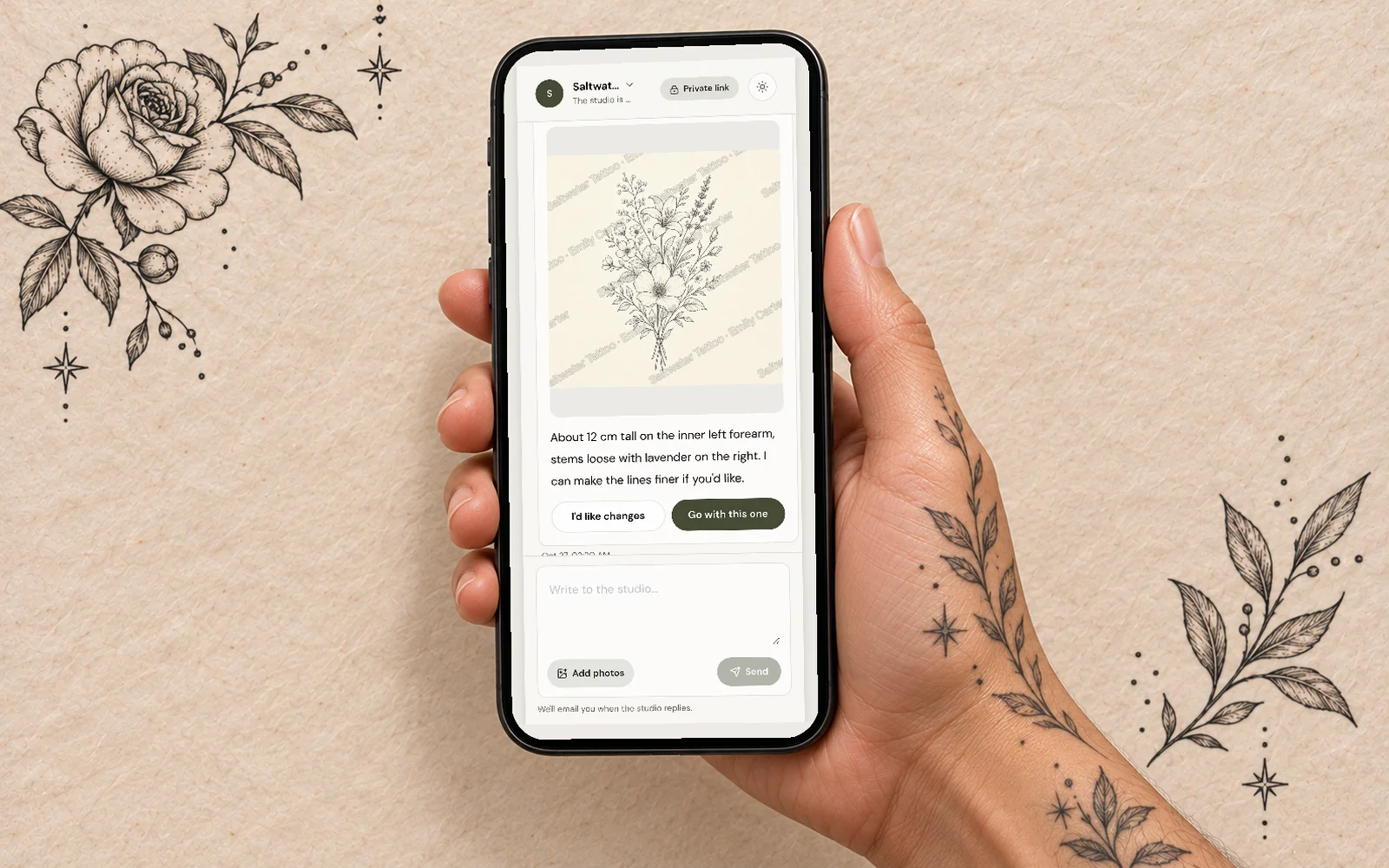
Each design you send in OpenInk Studio shows where it stands: Not opened yet, then Opened, Approved or Changes requested, each with the time it happened. The client answers with “Go with this one” or “I'd like changes” plus a note. When you send a new version, the old one is marked Newer version sent, so there's one current design and one dated approval on it. If the request came in through your consultation form, the original brief and references sit in the same conversation, which helps when a client remembers asking for something they never wrote down.
What copyright covers if a design gets copied
In the US, your drawing is protected by copyright as soon as it exists in fixed form, on paper or as a file. Copyright covers the drawing itself, not the idea behind it. Anyone can tattoo a rose with a dagger through it. The particular rose and dagger you drew are yours.
In practice, a lawsuit over one unregistered sketch usually costs more than it could win, so prevention does most of the work. If you sell flash sheets or have a design you'd really fight for, register it with the Copyright Office before it goes public. An IP lawyer can tell you whether that's worth the fee for your work.
This summary covers US law only. If you work in the UK, Canada or Australia, ask a local IP lawyer how the rules apply to you before you send anything formal.
Quick answers on sharing designs
- Sending designs before the appointment
- Plenty of clients want to see something first, and a watermarked draft is a reasonable middle ground. Send it after the deposit, at phone size, with your studio name and the client's name across it, and keep the clean line drawing for the day.
- When a client asks for the full-size file
- Say no, politely, and explain: the stencil gets made from it on the day, and the drawing stays with the studio. If they want something to keep, offer a photo of the healed tattoo, or sell the drawing as artwork at a price you're happy with.
- Clients who travel in for the session
- Send the watermarked draft at phone size, agree the changes in writing, and plan for small tweaks on the morning of the session. A video call where you walk through the design on screen also works, and then nothing gets sent at all.
- If a client takes your design to another artist
- Message the client first; sometimes they didn't realize it was a problem. Then message the other artist and show your dated drafts. Keep the deposit as your rules say, and if the copy is posted online, report it to the platform. A lawyer is usually the last step, for the reasons above.
More from the blog
- Tattoo no-shows: deposits, written rules and reminders that keep the chair full
The few reasons clients don't turn up, the fix for each one, a reminder and a no-show message to copy, and what to do with the empty chair.
- Tattoo consent form: what goes in it, state age rules and a template
The sections a consent form needs, the state rules that change it, and a template to copy. Plus the parts that still happen at the counter on the day.
- How much is a tattoo deposit: amounts by job size and how clients pay
Flat amounts, percentages and multi-session pieces worked through in dollars, plus the payment apps clients reach for and the catch with each one.
- Tattoo aftercare sheet: a template for clients, and the follow-up after the session
A template clients can follow at home, the states that want aftercare in writing, and a follow-up schedule that ends with an honest review request.
- How do tattoo artists get paid: commission, booth rent and guest spots
Who collects the money under commission, booth rent and guest spots, what the split should be calculated on, and how to close out a month without arguments.