

Published
Tattoo no-shows: deposits, written rules and reminders that keep the chair full
Most no-shows don't come from bad clients. They come from a date agreed in a DM five weeks ago, never confirmed, with nothing lost if the client stays home. Each of those has a fix you set up once: a deposit taken the moment the date is agreed, rules written down before anyone pays, and a short message the day before. This guide goes through each one, with a reminder and a no-show message to copy, and what to do when the chair stays empty anyway.
Why clients don't turn up
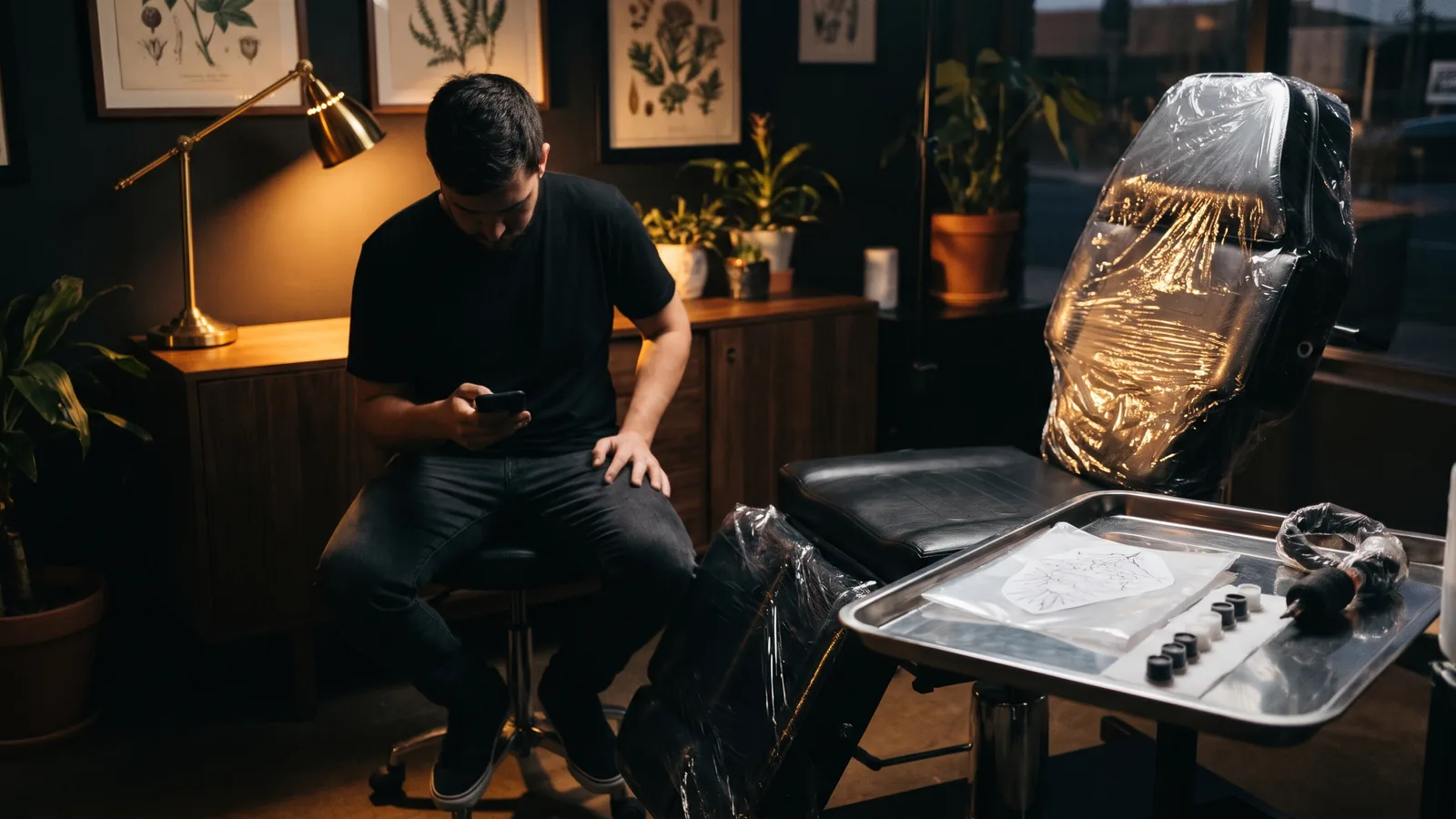
When you ask around, the reasons are rarely dramatic. The client forgot, because the date was set weeks ago and nothing has reminded them since. Or they never fully committed: the date was a line in a DM thread, not a booking with money behind it. Or something came up, nerves before a first tattoo, a bill, a shift change, and disappearing felt easier than writing to say so.
Each reason has its own fix, which is why a single tactic never solves the problem on its own:
- Forgot: a confirmation when the date is set and a reminder the day before.
- Never committed: a deposit taken when you agree the date, with the slot held only once it's paid.
- Something came up: a clear, easy way to move the date, so writing to you costs less than going quiet.
- Nothing to lose: rules the client has read and accepted before paying, so the deposit means something.
Take the deposit when you agree the date
A paid deposit is the clearest sign a client means it. Ask for it in the same conversation where you agree the date, not a week later, and treat the slot as open until the money arrives. A date without a deposit is a pencil mark: useful, but not something to turn other clients away for.
Make the amount big enough that losing it would sting. For larger pieces that's usually a share of the session price, for small ones a flat amount, and it always counts toward the final price, so it reads as part of the booking rather than a penalty. There's a full breakdown by job size in how much to ask for a tattoo deposit. For pieces spread over several sessions, many artists keep the deposit until the last one and take it off that final price, so every date in between stays covered.
Write the rules down before anyone pays
A rule that only exists in your head turns every cancellation into a negotiation, usually by DM, usually late at night. Decide your rules once and show them on the same screen where the client pays. Five decisions cover almost every case:
- Notice: how many hours before the session a client can still cancel or move without losing the deposit. Many artists ask for 48 or 72 hours, longer for full-day sessions.
- Late cancellation: part of the deposit back, or none.
- No-show: usually nothing back.
- Moving the date: how many times a booking can move, and whether a move inside the notice period needs a new deposit.
- If you cancel: the full deposit back, always.
Apply them the same way to everyone, and keep the exceptions for real emergencies: a hospital visit, a death in the family. Even then, moving the date and keeping the deposit on the booking is usually fairer to both of you than a refund. A worked example of what happens to a $150 deposit under rules like these, plus a policy to copy, is on our deposits page.
Confirm in writing as soon as it's paid
The confirmation turns a conversation into a booking. Send it the moment the deposit lands, with the date, time, address, what the deposit covers, your rules in a sentence or two, and how to ask for a change. It's also the message you'll point to later if a client says they never knew the terms.
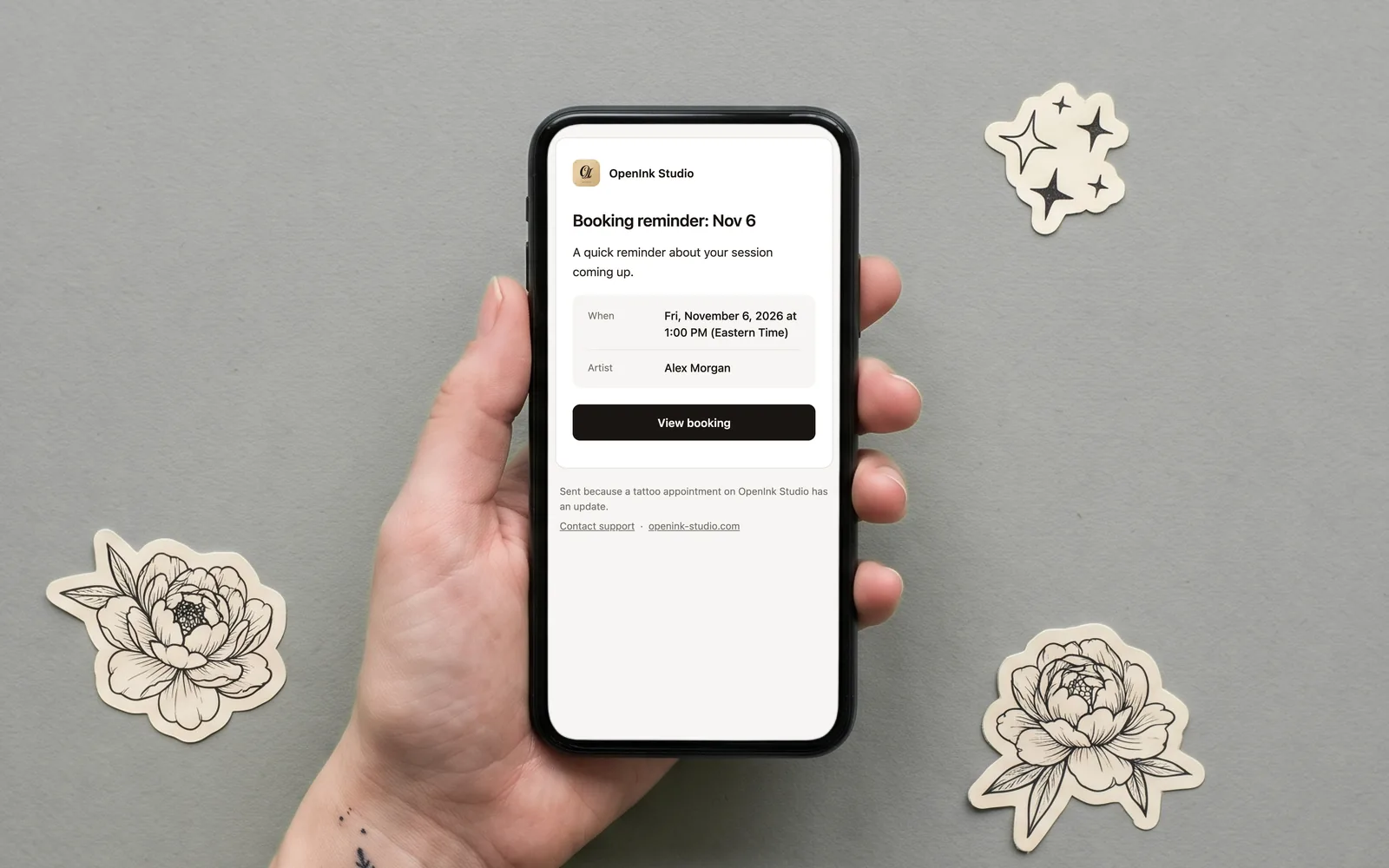
Send a reminder the day before
A day ahead is close enough that the client hasn't made other plans, and far enough that a real problem still reaches you in time to move the session. For long sessions some artists also write a week before, to settle the final design and the placement. Keep the day-before message short: date, time, address, how to reach you, and anything practical, like eating properly and wearing clothes that give access to the placement.
After weeks of silence, the reminder is there to make the appointment feel real again. Leave the warnings and the policy out of it; the client already accepted those when they paid. A friendly, practical message gets a reply far more often than a stern one.
A reminder message to copy
Send it the day before by email, text or DM, through whichever channel the client actually answers. Replace the parts in brackets.
Hi [name], see you tomorrow, [day], at [time] at [studio name], [address].

Please have a proper meal beforehand, wear something that leaves [placement] easy to reach, and bring [ID / your reference / anything else].

If something has come up, message me today at [phone or Instagram] and we'll find another date.

[Your name]
Make moving easier than disappearing
Clients who feel stuck go quiet. Say in the confirmation how to ask for a new date, then answer fast when they do. A moved booking keeps the deposit on your books and gives you days to fill the slot. A ghosted one costs you the whole day.
Limits keep this from turning into endless rescheduling. One or two moves with proper notice is generous; after that, or inside the notice period, a new deposit is fair. Put the limit in your rules so you never have to invent it on the spot.
When someone still doesn't show
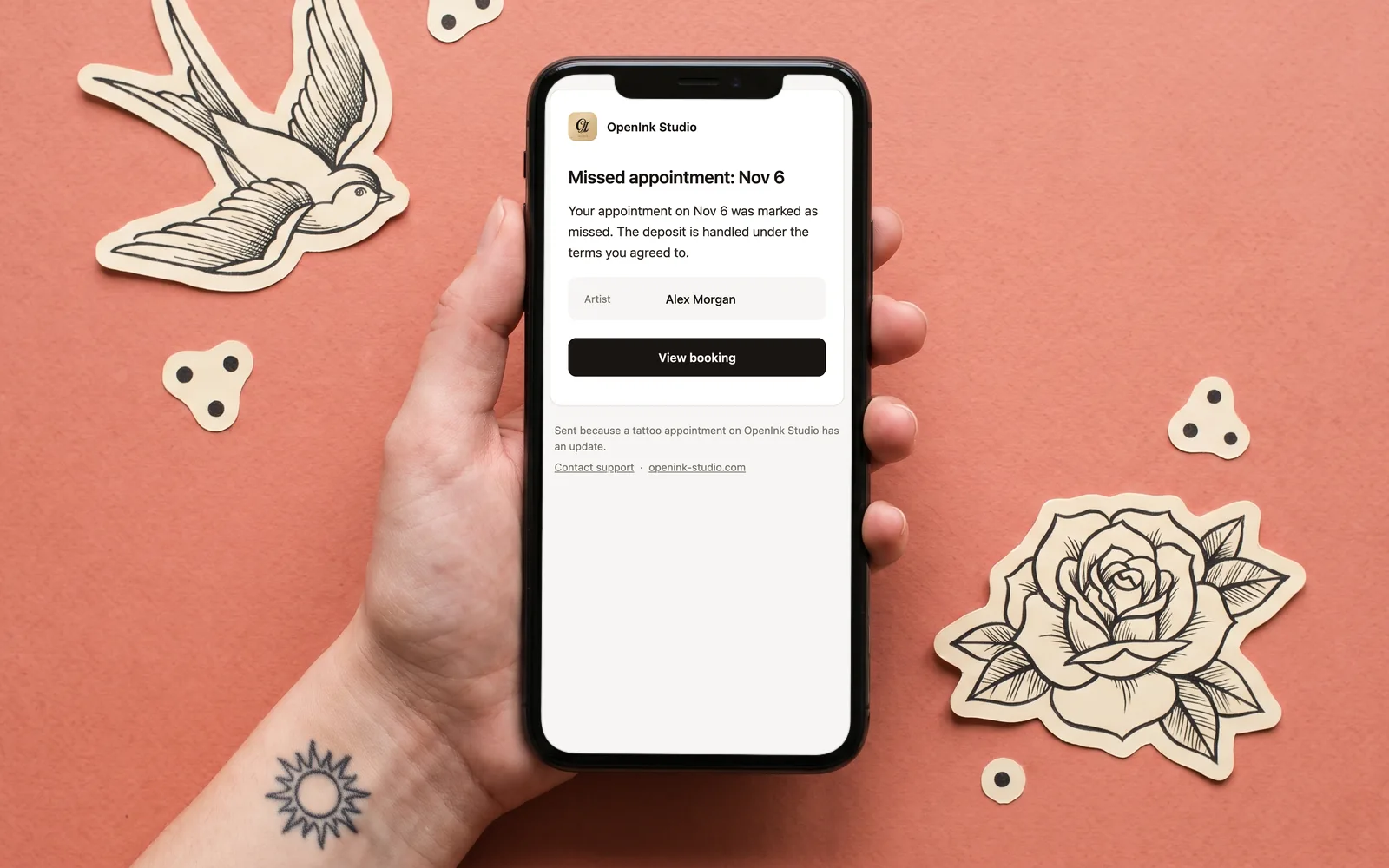
Wait fifteen minutes, then send one message. Keep it calm and factual: you had them booked, you haven't heard from them, the deposit stays with the studio as agreed, and here's how to book again. Then make a note of it, so it's in front of you the next time that client asks for a date.
A no-show message to copy
Send it once, about fifteen minutes after the start time. Replace the parts in brackets.
Hi [name], I had you booked today at [time] at [studio name] and haven't heard from you, so I've marked the session as missed. As agreed when you booked, the deposit stays with the studio.

If you'd like a new date, reply here and I'll send you a new booking link with a new deposit.

[Your name]
Before you book that client again, ask for a larger deposit or the full price upfront. One missed session can be bad luck. Two is a pattern, and it's fine to say no to a third.
A no-show fee that wasn't paid in advance is hard to collect. Asking for one after the fact usually ends in an argument and no money, which is the strongest case for taking the deposit before the date, not after.
Fill the empty chair
Keep a short list of clients who asked for an earlier date and message them first when a slot opens, from cancellations as well as no-shows. A small piece from a client who's already approved the design fits into a gap better than a new large one.
For same-day gaps, post the slot as flash on your stories with a fixed price and size. And if nobody bites, the time isn't lost: drawing, prepping stencils for the week and answering inquiries all fit into an empty afternoon.
No-show questions from other artists
- How long to wait before it counts as a no-show
- Fifteen minutes is common. Send your message then, and decide in your rules at what point the session is marked as missed, so you're not judging it fresh every time.
- Refunding a no-show's deposit
- Your rules decide, and most say nothing comes back. If there's a real emergency, offer to move the date with the deposit kept on the booking instead of refunding it.
- Charging a no-show fee without a deposit
- You can ask, but you can rarely collect. Treat it as a lesson and take a deposit when you book that client again.
- Deposits for small flash and touch-ups
- A small flat deposit still works. Walk-in flash days are the one place many artists skip it, since the client is already standing in the studio.
More from the blog
- Tattoo consent form: what goes in it, state age rules and a template
The sections a consent form needs, the state rules that change it, and a template to copy. Plus the parts that still happen at the counter on the day.
- How to send designs in advance without handing them to another shop
Plenty of clients want to see the drawing before they sit down. Here's how to show it without giving it away, and where copyright helps and where it doesn't.
- How much is a tattoo deposit: amounts by job size and how clients pay
Flat amounts, percentages and multi-session pieces worked through in dollars, plus the payment apps clients reach for and the catch with each one.
- Tattoo aftercare sheet: a template for clients, and the follow-up after the session
A template clients can follow at home, the states that want aftercare in writing, and a follow-up schedule that ends with an honest review request.
- How do tattoo artists get paid: commission, booth rent and guest spots
Who collects the money under commission, booth rent and guest spots, what the split should be calculated on, and how to close out a month without arguments.